There’s a quiet ache many of us are carrying right now.
Not always loud. Not always obvious. But persistent.
Loneliness.
And not the “I’m alone tonight” kind, the deeper kind. The kind that can sit in a room full of people. The kind that creeps in when we feel unseen, unheard, or disconnected from ourselves, from community, from Country.
Recent research shared by Flinders University highlights what many of us already know in our bodies: loneliness is not just an emotional state, it’s a public health issue. Chronic loneliness has been linked to poorer mental health, increased physical illness, and reduced life expectancy. But more importantly, the research points to something hopeful, connection is protective.
At Warida, we’d go one step further.
- Connection isn’t just protective.
- Connection is medicine.
Loneliness isn’t a personal failure — it’s a systemic one
So often, people internalise loneliness as something they’ve done wrong.
“What’s wrong with me?”
“Why can’t I just cope better?”
“Everyone else seems fine…”
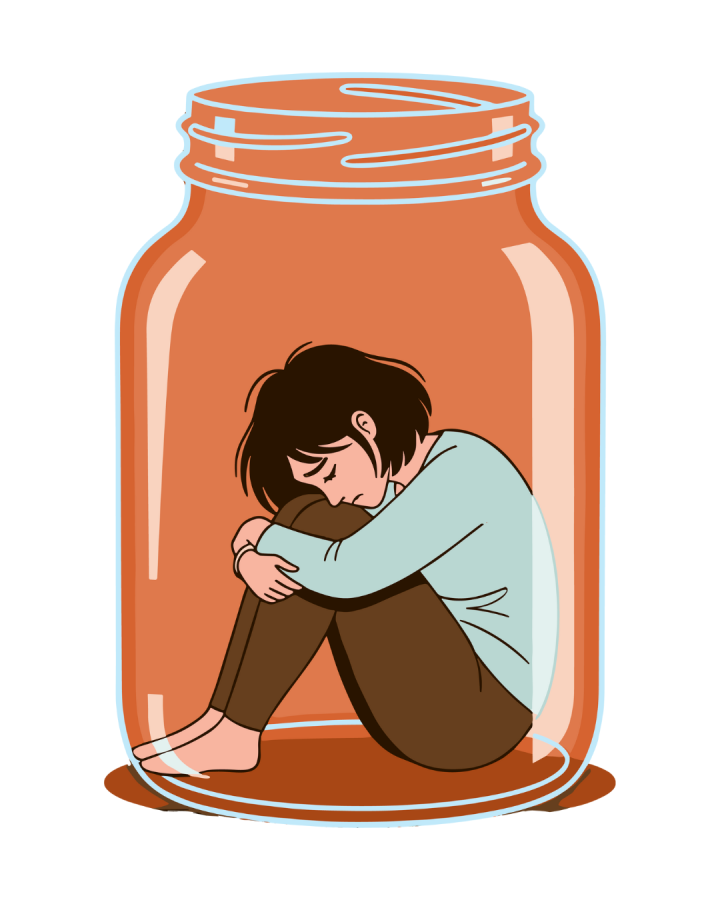
But loneliness doesn’t exist in a vacuum.
It grows in systems that prioritise productivity over relationship.
In models of care that isolate people into diagnoses rather than honouring their stories.
In a world that has pulled us away from collective ways of being, from sitting, yarning, listening deeply, and belonging.
From a First Nations perspective, this disconnection is not new. Colonisation deliberately fractured kinship systems, community bonds, and connection to Country. The impacts didn’t disappear, they echo across generations.
Which is why rebuilding connection must be relational, cultural, and grounded, not clinical and transactional.
Gudu-guduwa: coming together is not optional — it’s essential
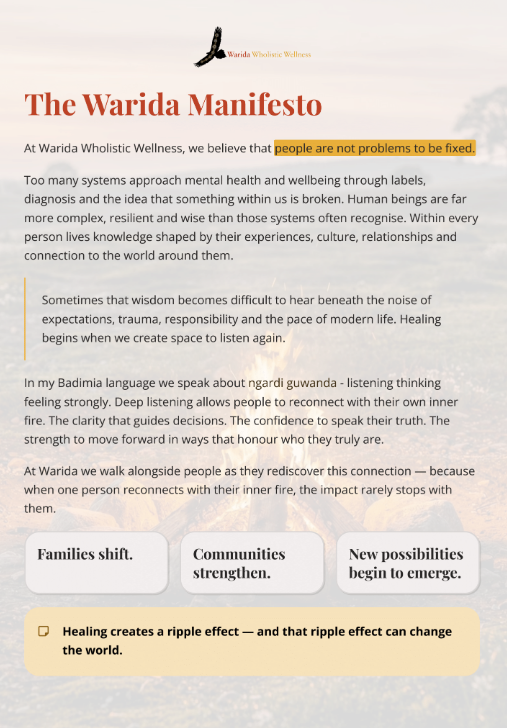
At Warida, we live the principle of gudu-guduwa (coming together).
Healing does not happen in isolation.
And it cannot be rushed.
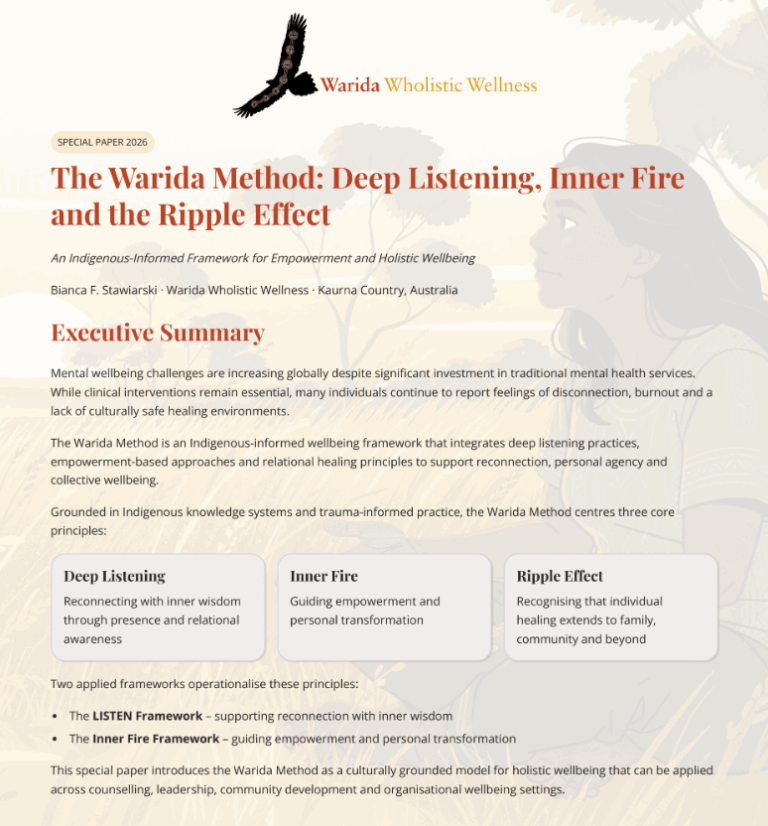
True connection begins with ngardi guwanda (thinking, feeling, listening strongly). Listening that involves thinking, feeling, sensing, and being fully present. Listening without fixing. Without labelling. Without hierarchy.
This is where loneliness begins to loosen its grip.
Not because everything is suddenly “better”, but because someone is finally walking alongside you, not ahead of you, not above you.
Why Western models often miss the mark
The Flinders article speaks to the importance of community-based responses to loneliness, and we agree. Where Warida gently challenges dominant models is this:
- You cannot prescribe connection.
- You cannot individualise what is fundamentally collective.
- And you cannot heal loneliness without addressing power, culture, and belonging.
Many people who come to Warida have already “done all the right things”, therapy, medication, programs, and still feel disconnected. That’s not because they failed.
It’s because their inner fire was never meant to be rekindled alone.
Reconnection is a remembering
At Warida, connection is not something we “add in”.
It is the foundation.
- Connection to self — remembering your inner wisdom
- Connection to others — being met with reciprocity and respect
- Connection to Country — grounding your healing in place, not pathology
This is healing on your own terms, held within community.
As the research reminds us, loneliness diminishes when people feel they matter.
Our work begins with a simple truth:
You matter. And you were never meant to carry life alone.
An invitation
If this resonates, if you’ve been feeling that quiet ache, consider this a gentle invitation.
To pause.
- To pause.
- To breathe.
- To reach out.
Whether through counselling, group spaces, or simply beginning a different kind of conversation, connection is something we build together.
And when we come together, truly, loneliness doesn’t stand a chance.
If you want to learn more, visit us: https://www.warida.com.au/services/
Yarn soon,
Bianca xx