Supervision held with care, depth and cultural integrity
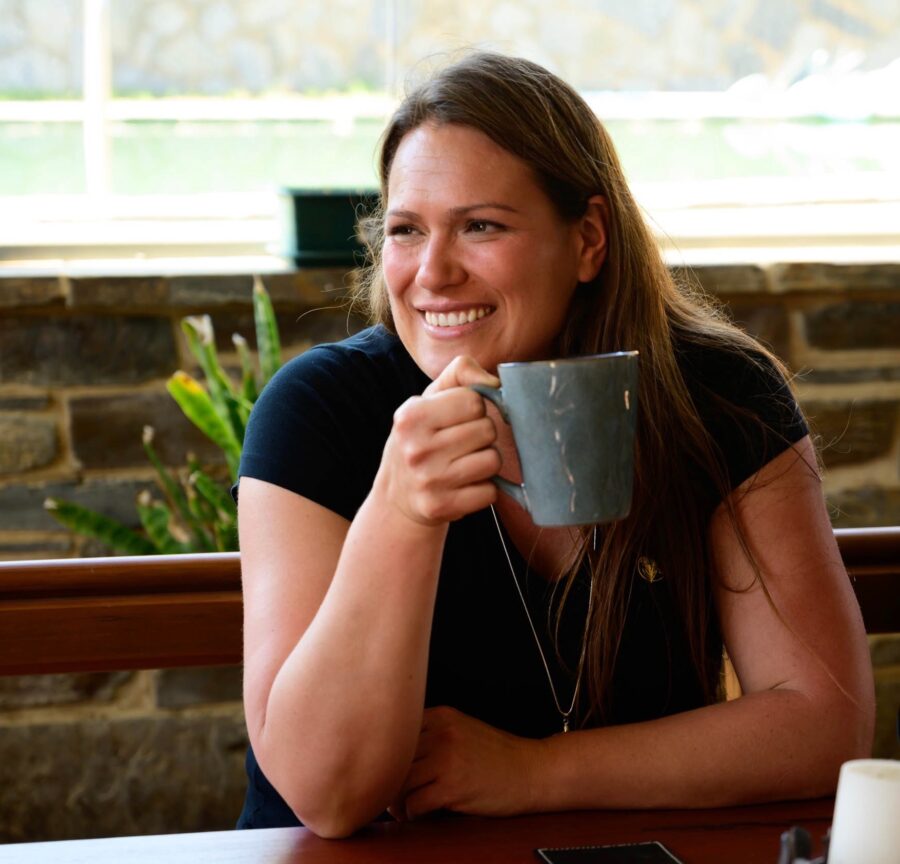
Clinical and cultural supervision with Bianca Stawiarski is a space to slow down, listen deeply and reflect honestly on the work you carry. It is not about being fixed as a practitioner. Rather, it is about having a grounded, respectful and professionally held space where your clinical work, cultural reflections, ethical questions, lived experience, uncertainty, responsibility and professional growth can sit together with care.
For practitioners, leaders, helping professionals, wellbeing workers and those working alongside First Nations communities.
A space to slow down, listen deeply and reflect honestly
At Warida, supervision is understood as both a professional relationship and a relational space. It supports safe, ethical and reflective practice while making room for the whole person doing the work. You bring more than your client notes into supervision. You bring your training, your values, your cultural location, your stories, your body, your strengths, your learning edges and the quieter places where the work has stayed with you.
This does not mean supervision becomes therapy. It means we make space for the human being doing the work, while staying grounded in client safety, ethical practice and professional responsibility.
My Approach
I offer integrative supervision informed by First Nations practices, relational practice, trauma informed practice, culturally grounded practice and reflective clinical supervision. This includes attention to deep listening, cultural safety, lived experience, thoughtful challenge, ethical accountability and the impact of culture, power, Country, community and context on practice.
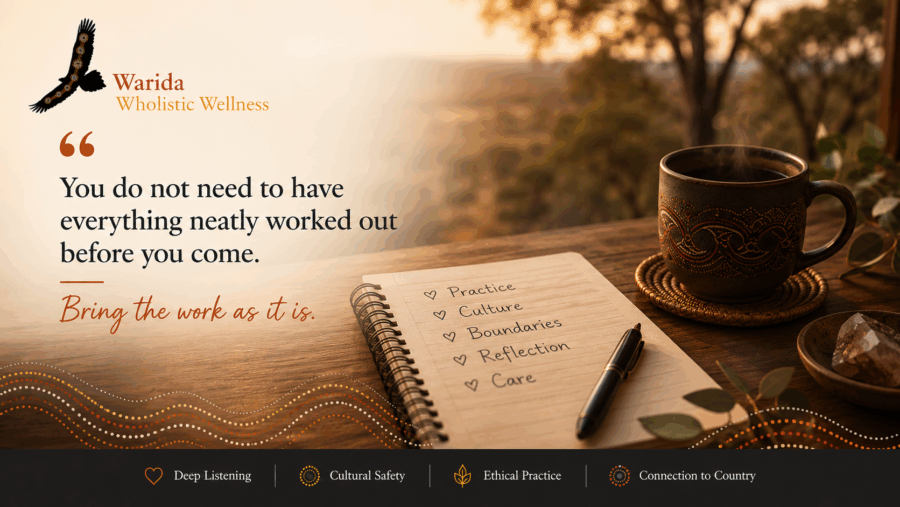
Deep Listening
Listening beyond the surface to what is being carried.
Cultural Safety
Honoring culture, identity, Country, and communication.
Relational Practice
Supervision as a professional relationship and relational space.
Thoughtful Challenge
Gently exploring complexity, discomfort and blind spots.
Ethical Accountability
Grounded in ethics, responsibility and professional integrity.
Country, Community & Context
Understanding the impact of culture, power and context on practice.
Supervision that honours both practice and personhood.
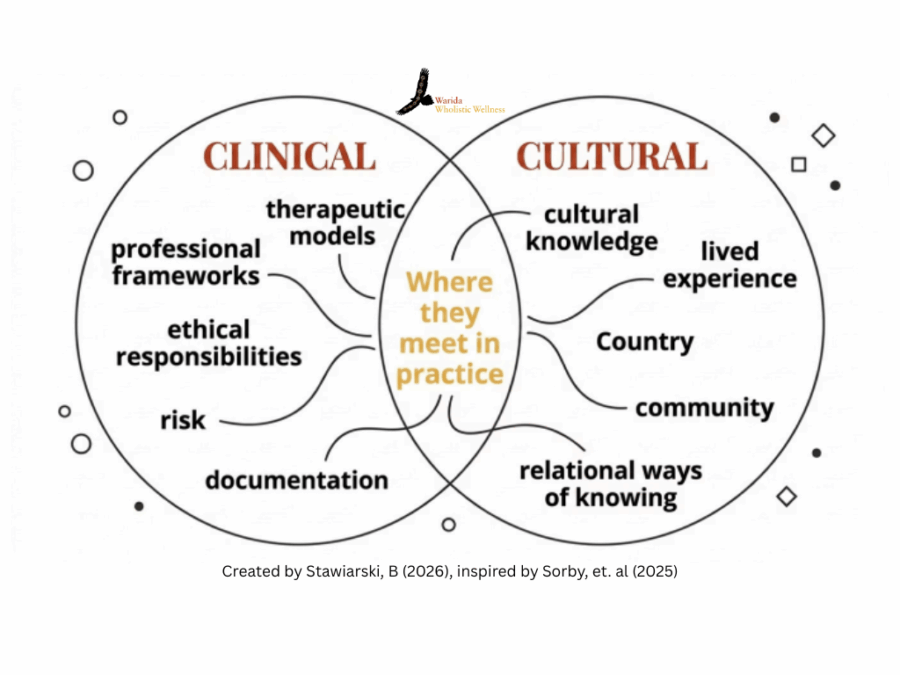
This is the space where clinical knowledge, cultural knowledge, ethical responsibility and lived experience come together.
Questions we may explore:
What is happening clinically?
What is happening culturally?
What is happening relationally?
Where might Western frameworks help?
Where might they limit what can be seen, heard or understood?
What does cultural safety ask of the practitioner in this moment?
What does ethical practice require when clinical and cultural responsibilities meet?
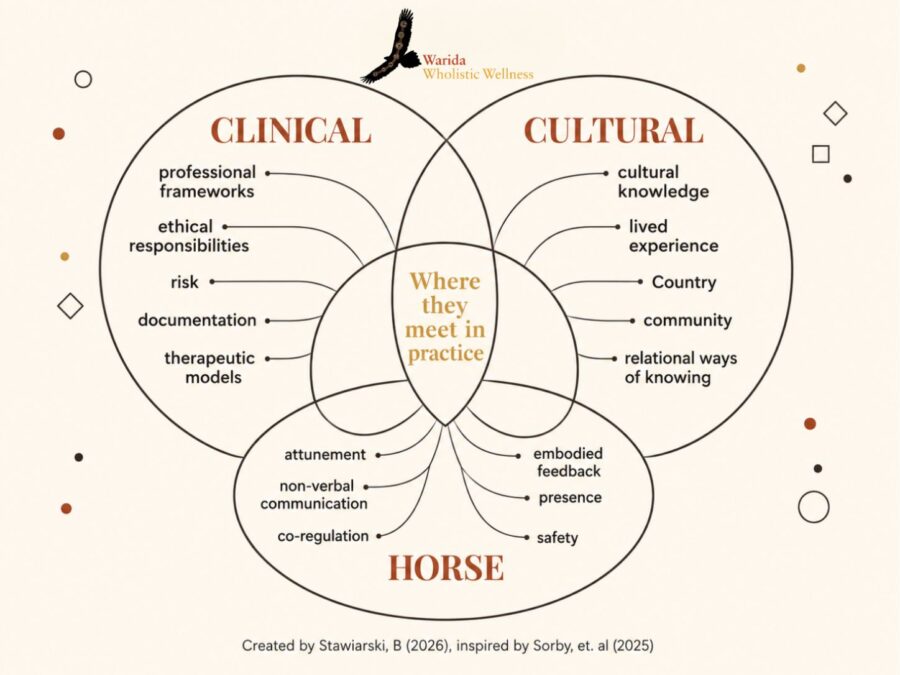
Where we need to reimagine the Clinical and Cultural Interface - For Equine Assisted Professionals
When working with Equine Assisted Professionals, the clinical and cultural interface is reimagined. It is still the space where clinical knowledge, cultural knowledge, ethical responsibility and lived experience come together. However, without recognising that the horse is an integral and unique part of that session, we are missing an critical part of supervision.
Therefore, when supervising equine assisted professionals, the interface also expands to where the horse meets in practice with the other two elements.
Choose the supervision pathway that best supports your work
Individual Supervision
A private and focused space for your own practice reflection.
Client work and clinical reasoning
Practitioner responses and use of self
Ethical and cultural reflection
Professional identity and learning edges
Moments that have challenged or touched you
Group Supervision
Shared reflective learning in a supportive and structured group.